
The Micro-Pond
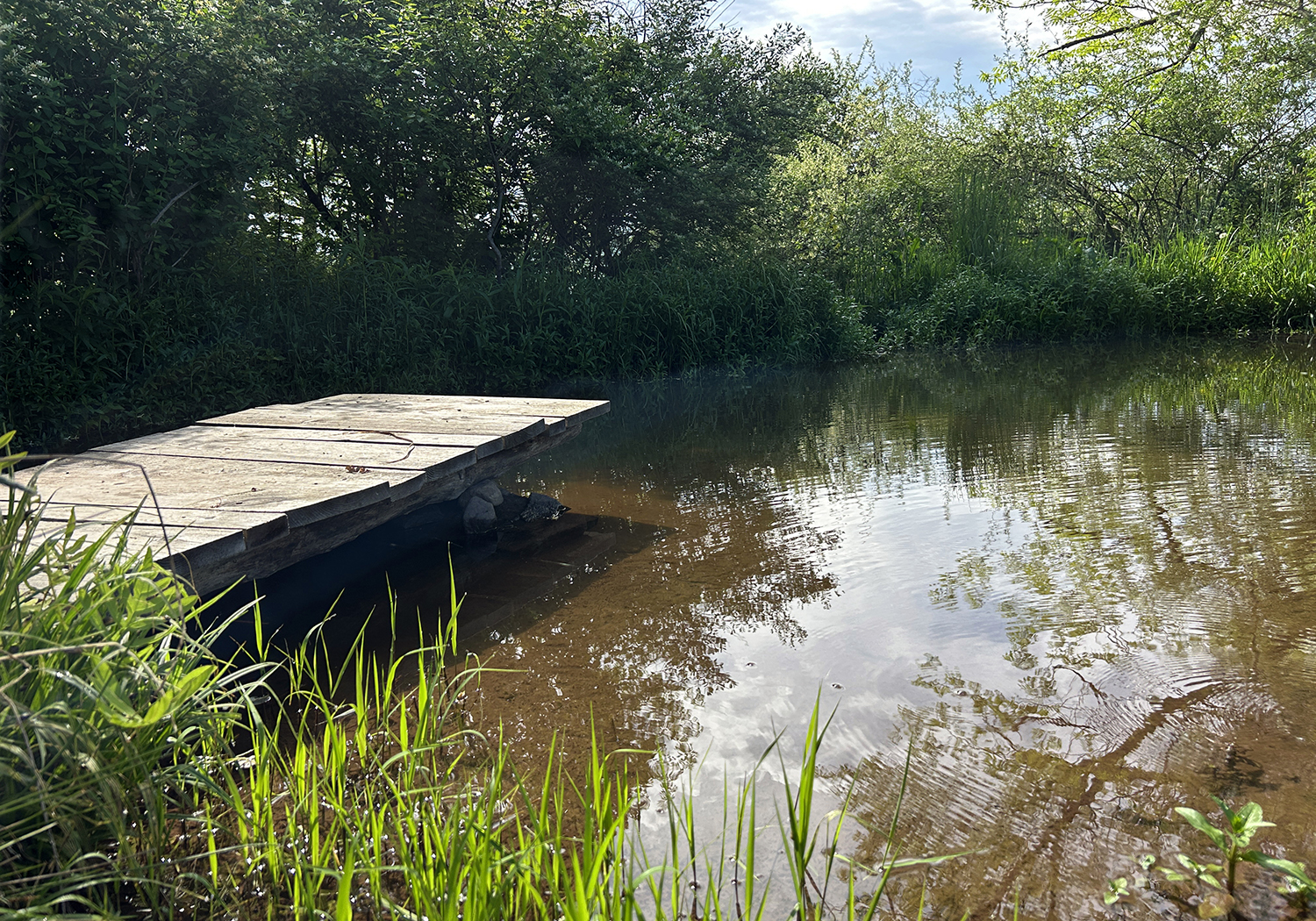
One of our favorite Ecotone Land interventions is the micro-pond. Large enough to support a biodiverse habitat but small enough to showcase nature at an approachable human scale, the micro-pond is a perfect example of a low-impact land improvement that benefits plants, animals, and humans alike.
On most unimproved properties in the Catskills exceeding three acres, you will find a bit of marsh—a swampy little spot caused by a deviation in the topographical contours, a seasonal spring, or an overgrown drainage line that no longer functions as intended. Rather than viewing this as a mucky inconvenience, we see it as an opportunity.
Rediscovering Natural Hydrology
When we purchased our property fifteen years ago, it was a head-scratcher how a piece of land with a notable slope could be so swampy. As we began work on our new homestead, we made site drainage our number one priority. Walking the land and paying close attention to contours and soil composition, we discovered long-abandoned drainage courses where farmers a century ago had redirected runoff using low-tech, low-impact methods.
By definition, low-impact strategies avoid heavy machinery, rely on biodegradable materials, and follow the path of least resistance. Armed with hand tools, we cleared and reopened these forgotten passages. We watched the water flow along its desired path and planned around the site’s natural hydrology. Within a year, our fields were rich and moist but no longer saturated. The runoff stabilized, giving us a seasonal brook that gurgled right alongside a meadow trail.
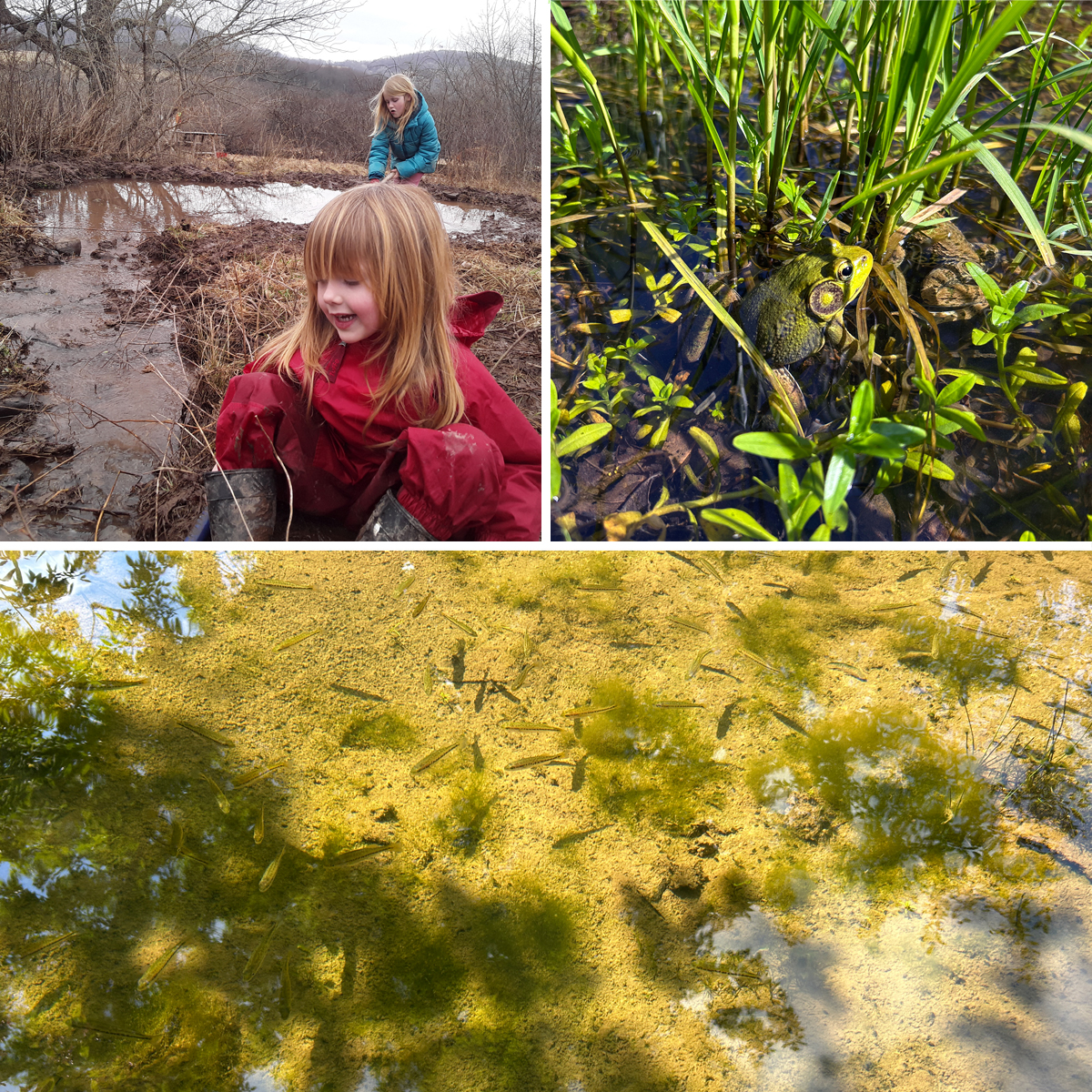
A few years later, we decided to expand a spot in the drainage system that swelled during our wettest seasons. With picks and shovels, we dug a small, shallow basin and dammed the water with a hand-hewn log. A wide variety of animals quickly made it their home, others made it a frequent pitstop along their daily travels. While not large enough to take a dip in, the micro-pond became a rich, active ecosystem presented on such an intimate scale that one cannot help but learn from it. Growing seasons, lifecycles, foraging, and hunting—all macro-ecological activities are on full display.
Welcoming the Bridal Shiner
This year, a new tenant arrived, expanding the pond's biodiversity and its functional role in the ecosystem. The Bridal Shiner is a tiny, straw-colored freshwater minnow native to the eastern United States and southeastern Canada. Typically growing only 1 to 2.75 inches long, it features a distinct, unbroken dark lateral stripe running from the tip of its nose, straight through the eye, and ending in a small spot at the base of the tail fin.
These small, friendly, attentive fish thrive in clear, shallow water with abundant aquatic vegetation. However, their population is sadly on the decline. While their arrival was enthusiastically welcomed as a small symbol of environmental restoration, their presence in our tiny pond serves as a stark reminder of the cascading effects of broader ecosystem disturbances.
The Threat of High-Impact Practices
As high-impact development and environmentally reckless practices move closer to our rivers and streams, aquatic habitats face both direct and indirect threats from contamination, siltation, warming water, and altered hydrology. Decreased sunlight and rising temperatures impede the growth of aquatic plants, lowering the habitat's capacity to support diverse species. Excessive fertilizer use can lead to deadly algal blooms. Riparian buffers - a strip of permanent vegetation such as trees, shrubs, and grasses, planted along the edge of a stream, river, or lake to protect water quality and stabilize the shoreline - are frequently stripped away without proper restoration.
These riparian buffers are critical: they maintain stream temperatures by providing shade, regulate organic matter, and slow or prevent the runoff of sediments from upland soil disturbances.
Climate change further compounds these threats, leaving lasting scars on aquatic systems. Irregular weather patterns cause extreme droughts, flooding, and severe temperature fluctuations. Heatwaves are becoming more intense, and precipitation is projected to increase by 10% to 15% in southern New York—and 15% to 20% in northern New York—by 2050. Extreme flooding triggers widespread erosion, while temperature increases significantly alter ecosystems, shifting species distributions.
Nurturing the Bigger Picture
Witnessing a healthy ecosystem thrive right outside your door is an excellent way to build ecological empathy. Interacting with nature on a small scale opens our eyes to the bigger picture.
The micro-pond demonstrates how low-impact land management and thoughtful stewardship can create vital sanctuaries for vulnerable species like the Bridal Shiner. By fostering ecological empathy through these small-scale interventions, our local actions can effectively combat habitat loss and inspire broader environmental restoration.

