
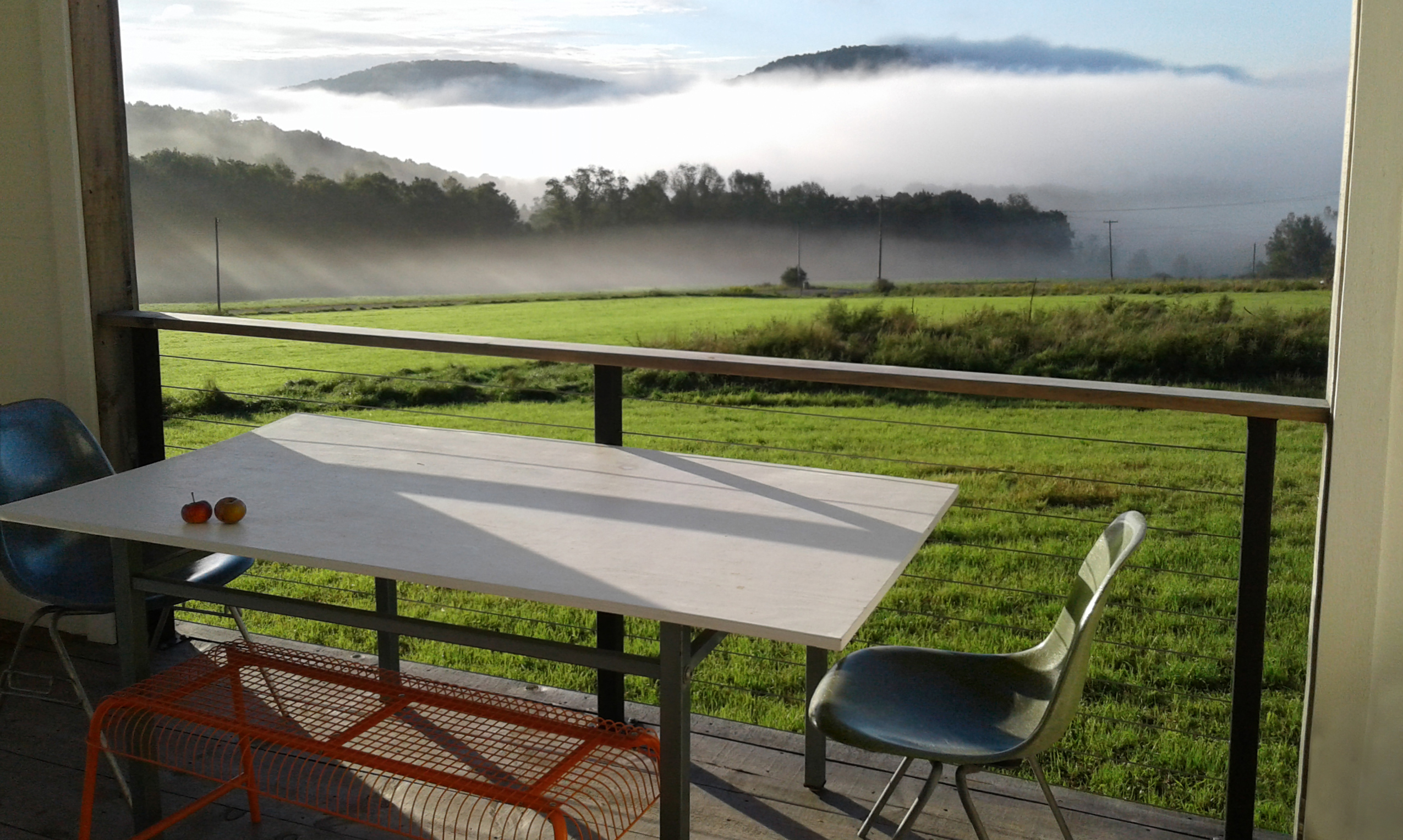
More than a Porch
Ecotone House is conceived as an architecture of transition — a dwelling that exists between shelter and exposure, between the precision of a high-performance home and the ever-changing atmosphere of the natural world. Inspired by the ecological term “ecotone,” which describes the boundary condition where two ecosystems overlap and interact, we explore how architecture can occupy this fertile middle ground. Rather than drawing a hard line between indoors and outdoors, Ecotone House creates a layered sequence of spaces that gradually immerse occupants in light, air, weather, and landscape while maintaining comfort, protection, and energy efficiency.
At the core of the project is a highly engineered, high-performance envelope designed to provide exceptional thermal comfort, durability, and resilience in all seasons and weather conditions. This inner volume functions as the protected heart of the home — a carefully crafted conditioned environment where precision matters. Airtight construction, robust insulation, and high-performance glazing work together to create a calm and stable interior atmosphere that minimizes energy consumption while maximizing comfort. During harsh winters, intense summer heat, storms, or high winds, the inner envelope offers security and refuge without sacrificing openness or connection to the outdoors.
Wrapped around this insulated core is what we call the ambient shell — a secondary architectural layer that fundamentally redefines the idea of the porch. More than an appendage or exterior deck, the shell acts as an inhabitable threshold between conditioned interior space and the surrounding environment. It is neither fully indoors nor entirely outdoors. Instead, it creates a semi-conditioned zone that tempers exposure to sun, wind, rain, and shifting seasonal conditions while preserving a profound sense of openness to the landscape.
Traditional porches are often experienced as additive elements: roofs supported by columns with railings that establish a clear visual and psychological edge. The ambient shell challenges this convention. Full-height wall planes, opaque corners, and carefully proportioned openings create a stronger sense of spatial enclosure and atmospheric depth. The result is a space that feels protective without becoming interiorized. Expansive openings frame panoramic views of the surrounding terrain, forests, meadows, or sky, creating moments that feel cinematic and immersive rather than merely exposed.
This subtle distinction produces a powerful emotional effect. Occupants experience the sensory richness of being outdoors — changing light, moving air, distant sounds, rainfall, the shifting temperature of the day — while remaining buffered from direct exposure. The shell creates an architecture of comfort that is psychological as much as physical. It encourages inhabitation during weather conditions and seasons when a conventional outdoor space might sit empty and unused.
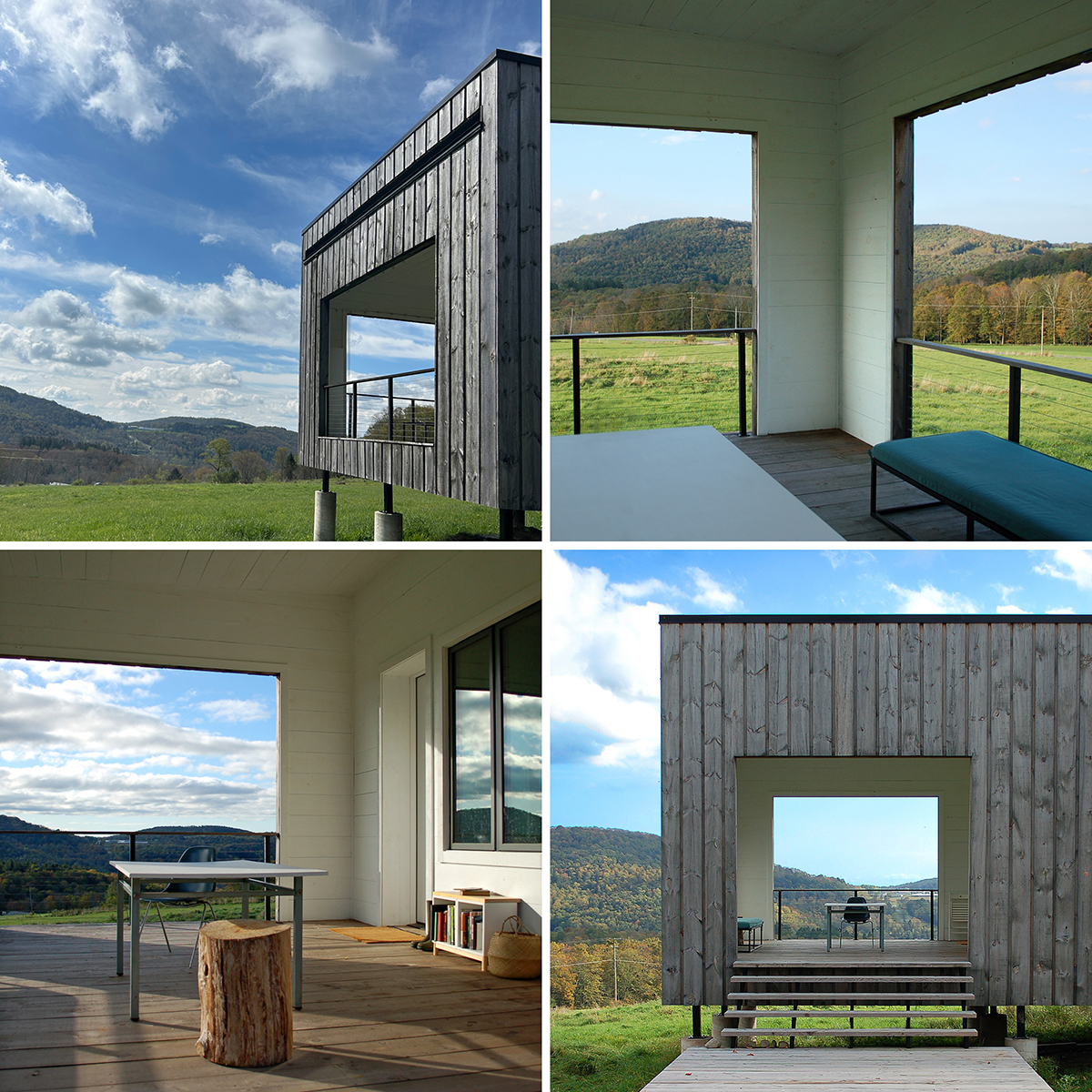
The organization of the house further amplifies this relationship to the landscape. Ecotone House incorporates a semi-submerged lower level that carefully follows and respects the site’s natural topography. Rather than imposing a flattened building pad onto the land, the structure engages the slope directly, allowing portions of the home to settle into the terrain while elevating the ambient shell above the existing grade. This approach minimizes disruption to the landscape and generates a surprising spatial condition: the sensation of floating within the environment.
Elevated above the ground plane, the ambient shell gains the advantages of both shelter and perch. Views extend further across the site, breezes move more freely through the space, and occupants feel lifted into the tree canopy, sky, or surrounding horizon. The raised position also creates practical benefits, improving protection from insects, moisture, and ground-level disturbances while increasing privacy and comfort.
The ambient shell is intentionally generous in scale, particularly in configurations with the extended East and West options. These enlarged semi-conditioned spaces significantly expand the functional footprint of the home and support a broader range of daily life. They become places to gather, dine, cook, read, work, play, rest, and even sleep. Morning coffee can be enjoyed within cool filtered air as sunlight enters through the eastern opening, while evening meals unfold against the warm glow of sunset framed by the western horizon. Throughout the day, the shell transforms with the changing atmosphere, making time and weather visible parts of domestic experience.
The directional logic of the East and West extensions is rooted in the rhythms of the natural world. As the sun rises in the east and sets in the west, each orientation produces a distinct quality of light, temperature, and inhabitation. The architecture invites the site itself to determine the ideal relationship. One property may call for western expansion toward distant sunset views over an open meadow or valley, while another may favor eastern exposure where morning light filters softly through a dense woodland canopy. Rather than imposing a singular formal response, Ecotone House adapts to the experiential opportunities already present within the landscape.
Materiality throughout the project reinforces this layered architectural concept. The inner envelope expresses precision, performance, and durability, while the ambient shell embraces texture, shadow, weathering, and the changing qualities of natural light. Together, these two systems establish a dialogue between permanence and change, control and openness, refuge and immersion.
Ultimately, Ecotone House proposes a different model for contemporary living — one that recognizes comfort and connection to nature as complementary rather than opposing conditions. The project rejects the conventional binary of inside versus outside in favor of a more nuanced and emotionally resonant experience. Through the interaction of the high-performance core and the ambient shell, the house becomes an instrument for engaging climate, landscape, and time itself.
It is not simply a home placed within nature, but a living threshold that allows occupants to feel continuously connected to the world around them while remaining protected within it.

