
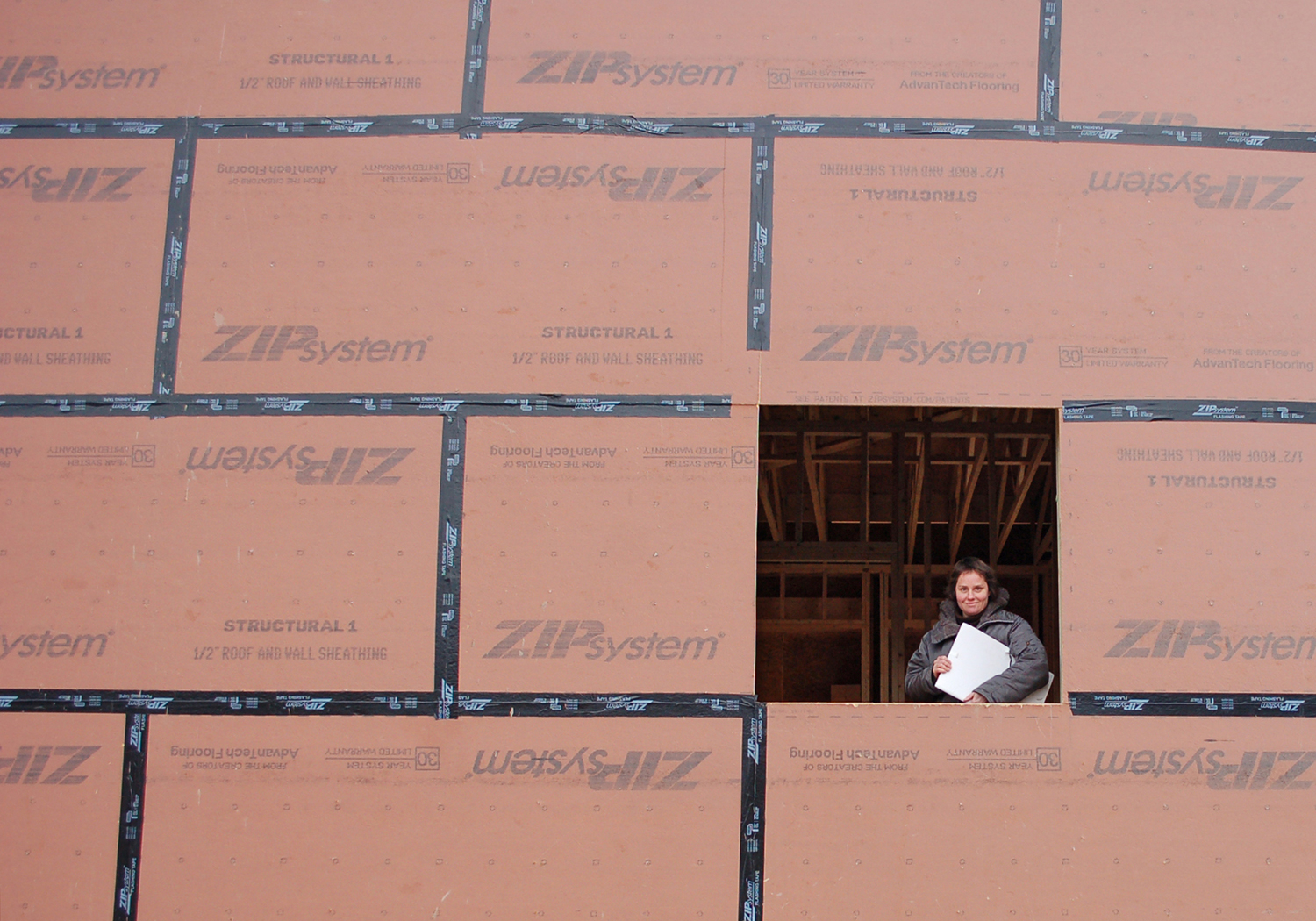
Meet the Architect
Ecotone Home is excited to introduce the team behind your future home. This week, we’ll hear from Nora Meehan - Architect of Ecotone House and Founding Partner of Ecotone Home. She is a New York State - licensed Architect and a Certified Passive House Designer.
My name is Nora Meehan. I have been practicing Architecture in New York City and the Western Catskills for almost 20 years. For much of my career I have specialized in residential design, and I am thrilled to bring my experience and my enthusiasm to Ecotone Home. Ecotone Home is a family business predicated on a lifestyle that I have enjoyed with my partner and my two kids for the past decade. I’m very proud of it. It is a product I can really stand behind and honestly recommend to clients as something that will change their life in a very positive and meaningful way.
I became an Architect because I like to make things. Growing up I was not so much an arty kid or one that tinkered with engineering, but I was a maker. Drawn to craft and shaping materials with care and intention, I’ve always found a sense of focus and satisfaction in the process itself. Architecture is an extension of those maker instincts for me. It offers a way to work at a larger scale while maintaining the same sensitivity to material, detail, and process. It brings together creativity and technical rigor; it’s a discipline that values both imagination and precision where design thinking is inseparable from the realities of making and I find that very rewarding.
I love residential work because it encompasses a remarkable breadth of human experience. It must reflect the quiet (or not so quiet) rhythms of daily life as much as it accommodates moments of celebration, transition, and growth. Designing a home is an inherently personal and intimate endeavor. Few places hold as much emotional weight as the one a person calls home. Because of this, the act of designing a home carries a profound responsibility. At its core, residential design means supporting the full arc of human life. It requires a thoughtful balance between the present and the future - a balance between immediate needs and those that have yet to reveal themselves.
Functionally, a home should anticipate change through thoughtful planning, allowing spaces to be reinterpreted and reconfigured as needed. Emotionally, it should foster a sense of belonging, comfort, and connection. Light, materiality, scale, and proportion all contribute to how a space is experienced, shaping mood and influencing behavior in subtle yet powerful ways. The most successful homes are those that feel intuitive - spaces that support their occupants almost effortlessly, enhancing daily life without demanding constant attention
Residential work invites a level of engagement that goes beyond typical professional interaction. It requires trust, openness, and a willingness to listen deeply. My experience - both in building and in listening - fundamentally shapes how I approach each project. Hands-on knowledge of construction informs a respect for materials, detailing, and the realities of execution. It grounds design decisions in practicality and ensures that ideas can be carried through with integrity. At the same time, the act of listening is crucial. Understanding how clients live, what they value, and how they imagine their future allows me to translate abstract needs into thoughtful, responsive spaces. These two things foster a process that is both grounded and empathetic. It allows for a design approach that is attentive not only to form and function, but also to nuance. It informs how a space feels, how it supports daily rituals, and how it adapts over time. Ultimately, residential work is not just about creating houses, but about shaping environments that reflect and support the lives within them.
I believe that great homes are the result of strong, thoughtful collaboration. They emerge from a collective process shaped by dialogue, trust, and shared intent. At the residential scale, where every decision has a direct impact on daily life, collaboration becomes essential - not only between designer and client, but among all those involved in bringing a project to life. The quality of a home is often defined in its details - the way materials meet, the precision of execution, and the care invested in each element. Craftspeople bring a level of knowledge and sensitivity that elevates a project transforming concepts into something tangible and enduring. Recognizing and valuing this expertise strengthens the collaborative process and results in work that feels considered at every scale. I’ve always enjoyed working with contractors. Close working relationships and the ability to learn from others in their area of expertise is an advantage to working on smaller scale projects that require a soup to nuts approach. I enjoy being involved in a project’s inception as much as I enjoy the final walk through where every phase of the project has been a careful, informed step towards a finished product that I can be proud of and that I know my clients will love.
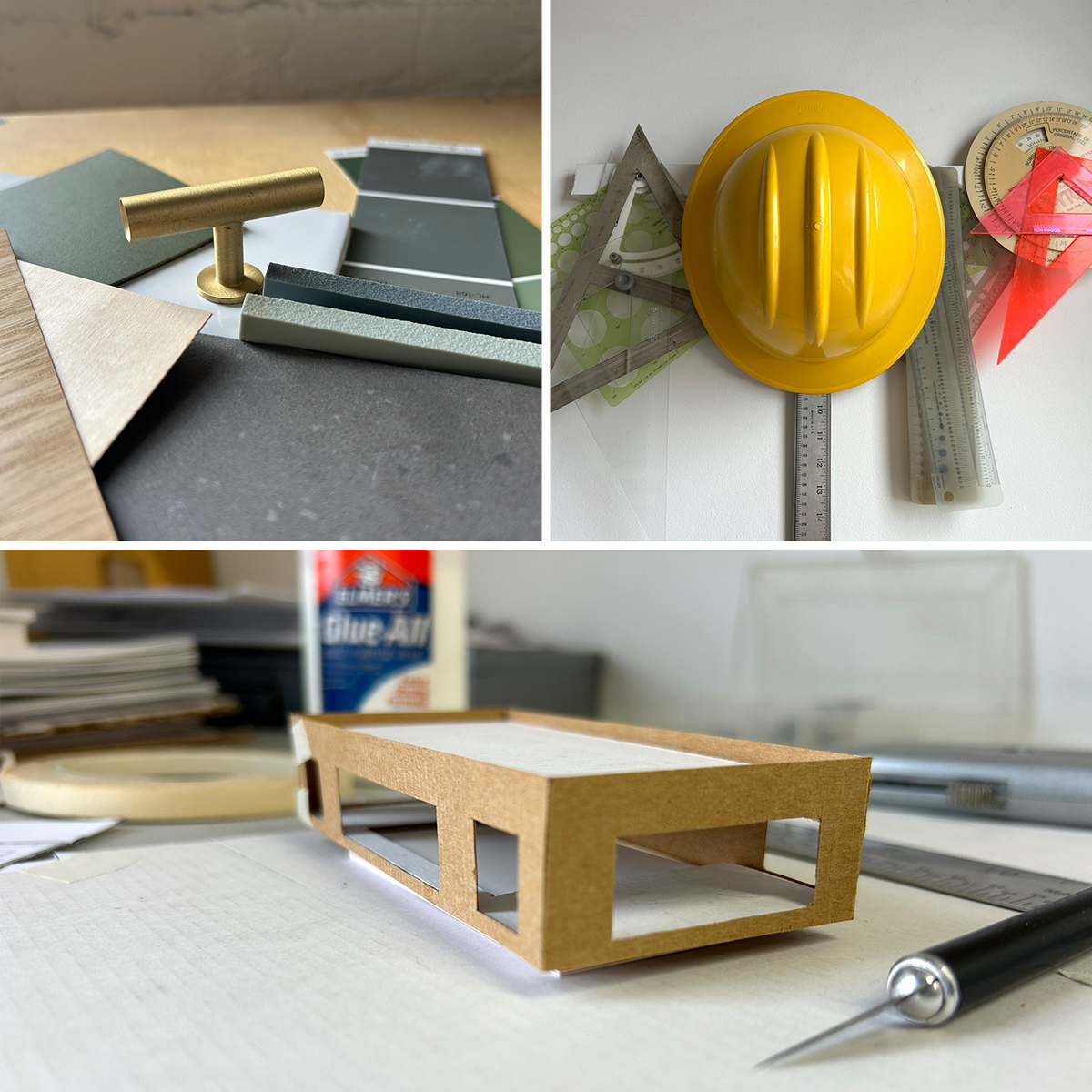
Ecotone Home is my first pursuit in the world of predesign, and I have brought to it the same care, the same thoughtfulness and the same intent I bring to every custom project. I have applied my years of experience in design, construction and in listening to establishing and refining a system that streamlines the design process, saving the client time and money while leaving room for individuality, personal preference, and choice. Predesigned homes offer a compelling opportunity to rethink not only how we design, but how we build. In contrast to conventional, fully bespoke processes, they introduce a level of intentionality, efficiency, and repeatability that can meaningfully improve both quality and outcomes. Rather than limiting creativity, a predesign approach invites a more focused form of design thinking - one that distills essential ideas, refines them through iteration, and delivers them with clarity and precision.
At the center of this approach is a commitment to sustainability. I’m not sure how we can think of the full arc of human life and not consider the future of our planet and how our actions impact the environment today and the environment of tomorrow. Ecotone House utilizes a predesign approach in order to invest more in environmentally conscientious design. By working within a defined system, it becomes possible to reduce material waste, optimize resource use, and make more responsible decisions about how homes are constructed. Standardization allows for tighter control over material quantities, better coordination across trades, and a more efficient construction process overall. These efficiencies not only reduce environmental impact, but also contribute to greater predictability in cost and schedule.
Panelized construction plays a key role in realizing these benefits. By shifting much of the building process to a controlled environment, it allows for improved quality control, reduced site disruption, and faster assembly. Components can be fabricated with a high degree of accuracy, minimizing errors, and ensuring that each piece fits together as intended. This method also reduces exposure to weather and other variables that often compromise traditional construction, resulting in a more consistent and durable final product.
Ecotone House offers a framework that balances consistency with flexibility. It is a thoughtfully developed system that can accommodate variation - responding to site conditions, climate, and personal preferences - while maintaining the efficiencies that make it viable. In this way, Ecotone House’s predesign approach is not about uniformity but about adaptability within a clear and coherent structure.
Inspired by the efficiency and directness of industrial buildings, Ecotone House embraces a language of construction that is honest and legible. Its forms are guided by purpose; its materials expressed with intention, and its assembly clearly articulated. This influence is not aesthetic alone, but philosophical - an understanding that beauty can emerge from logic, economy, and precision. By prioritizing clarity over excess, the design achieves a quiet elegance that is both timeless and grounded.
Ecotone House delivers a high-quality environment that is efficient, sustainable, and enduring. It demonstrates that thoughtful constraints, when applied with care, can lead to outcomes that are not only practical, but deeply considered and forward-looking. It represents a balance I care deeply about - one that exists between apparent opposites, yet resolves into something cohesive and deliberate. It is both standardized and flexible, simple yet refined. These qualities are not contradictions, but complementary forces that shape a design approach rooted in clarity, restraint, and adaptability. The result is a home that is both repeatable and distinct, capable of evolving without becoming diluted.

