
Building with Wattle
Wattle, the weaving together of thin tree branches in a basket-like fashion, is a traditional technique for making lightweight fences and the interior structure of a home’s walls. Dating back to neolithic times, wattle is known to have been used by the Romans, noted in Vitruvius's classic treatise De Architecture. When used for wall structure the weave is covered with a layer of mud or plaster and is described as “wattle and daube”. From the 1500s through 1800s, wattle was used to make large heavy baskets called “gabions.” When filled with earth they were employed to protect artillery positions in the line of fire.
The technique is simple. Gather long thin tree limbs or saplings that are flexible and straight for the “withies” (these are the woven elements). Gather older, sturdy saplings to use as the “staves” (these are the vertical members that the withes are woven around). Willow, birch and hazel are considered the best options for weaving but almost any limb can be used. The stakes should be more rigid than the weavers and be strong enough to be driven into the ground or anchored in some way.
Withies must be long enough to be woven between at least three of the upright staves to achieve tension and retain the fence shape. After a layer of withies is woven between the staves, they are pushed down and the process is repeated, one weave going behind a stave, and the next one above it going in front of the stave. Sometimes the starting points of the withies are staggered, thus avoiding a specific starting and ending point in the weave and also allowing the use of withes of different lengths.
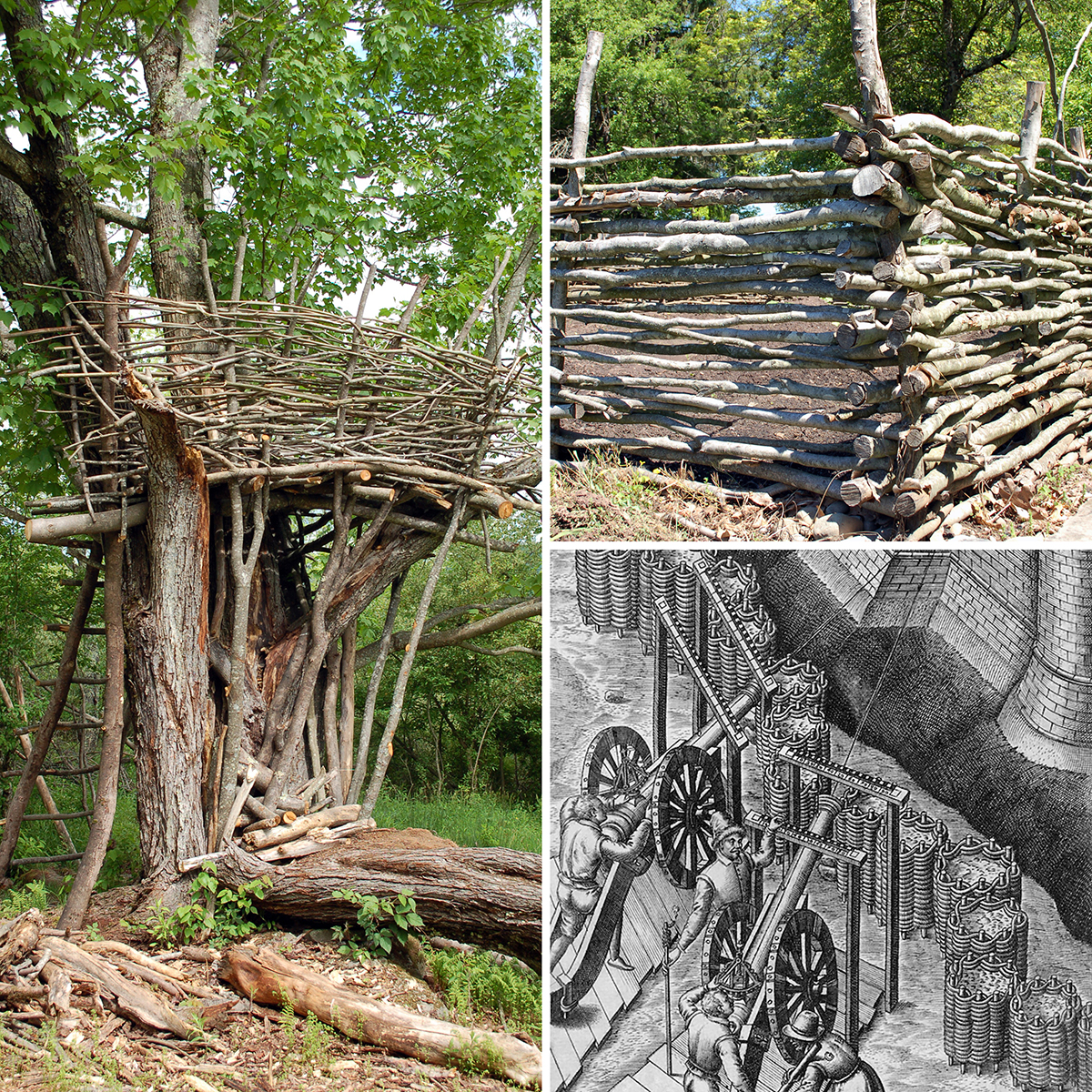
The images above show a wattle “crows nest” built by Ecotone Home, a perfectly handled wattle garden fence at Fort Delaware in Narrowsburg New York, and a renaissance era engraving showing gabions protecting a siege gun.
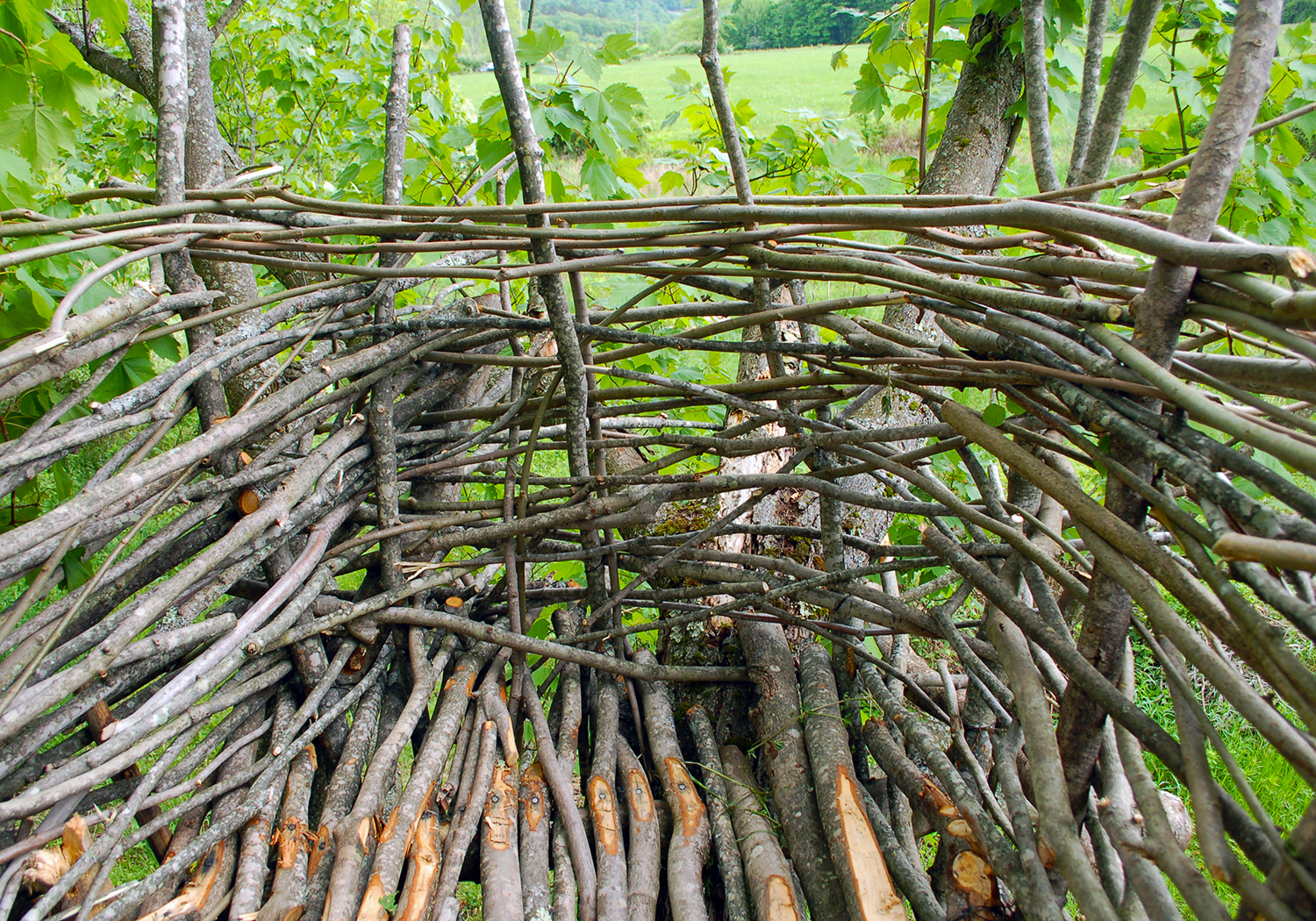
We recently used a very rough and loose wattle to make this “crows nest” style tree house at our property in North Branch. More of an observation platform or basket than a house, it was made by interweaving the branches of a nearby fallen tree. The heavier branches were used to support the floor of the platform (carefully utilizing the forks in the branches) and the thinner, wispy branches were woven around the supports to make the sides of the “basket”.
Wattle is a great way to make use of tree debris if the branches are plentiful and flexible enough to be woven. Willow, birch and hazel branches are favored because they can be used either intact or split; they can be stored for future use and made flexible again by soaking in water when needed. If you don’t have access to willow, birch or hazel and an improvisational style works for your project many trees and large shrubs work well enough if used while still green. Wattle fences last up to ten years, depending on the climate and the wood used.

