
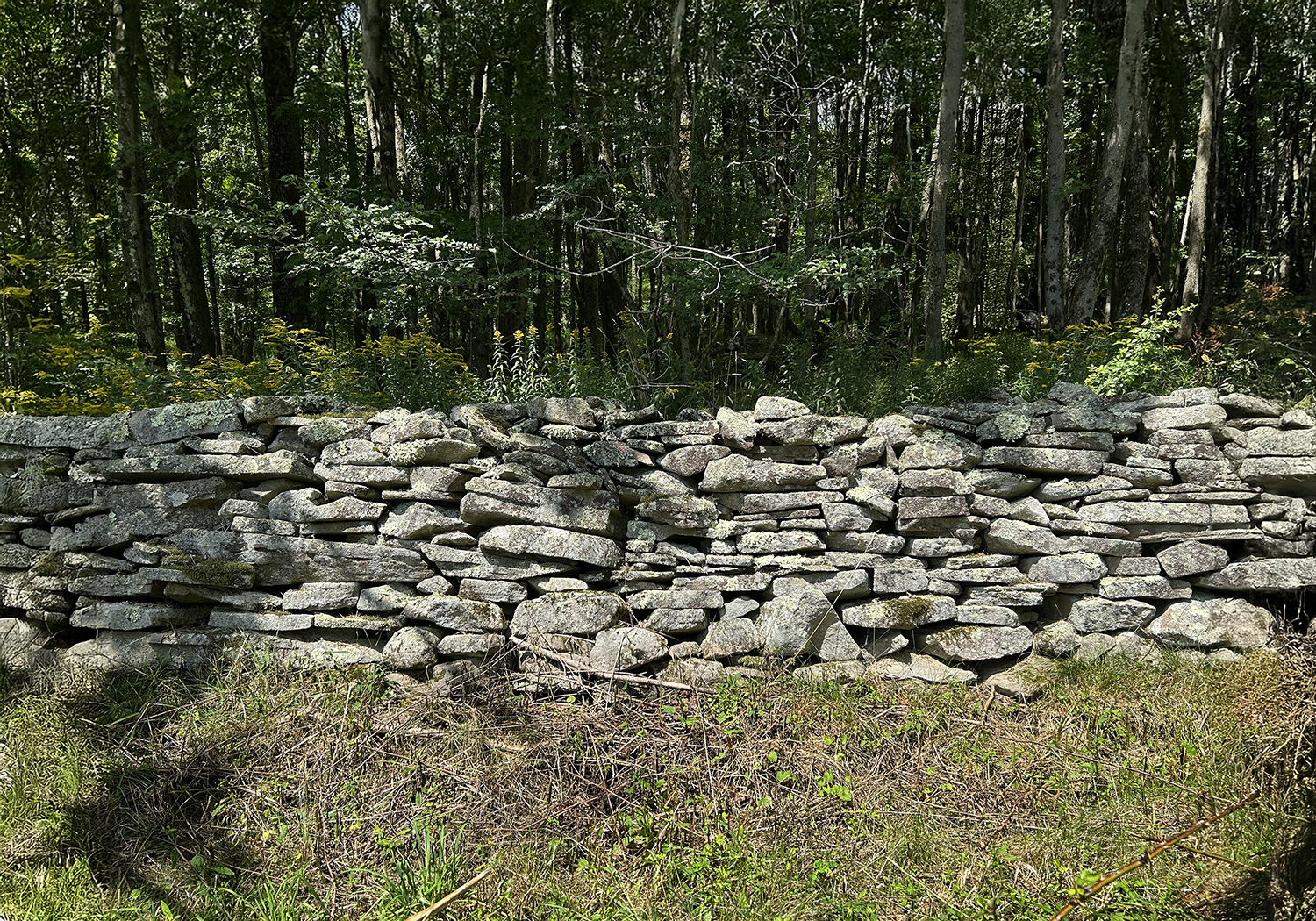
Dry Stone Walls
Dry stone walls are a common and beautiful land feature of the rural northeast. Originally constructed for the most pragmatic reasons, they are a smart blending of necessity, function and utilization of materials at hand.
Today most of these walls that once surrounded plowed fields or livestock pastures have been reclaimed by woods, as farmland that was once laboriously cleared of trees, has returned to a wooded state. When encountered in what seems like an unspoiled forest they appear to be an inexplicable, strange and massively time-consuming project with no real purpose. But the purpose was simple; rocks were piled up to get them out of the way.
As colonial farmers moved into the interior, a sequence of environmental modifications became routine leading to thousands of miles of dry-stone walls.
First phase: trees were cleared to expose land for cultivation and animal husbandry. These trees satisfied one of the first construction requirements, fencing. Either as split rail fences or as organized brush and stump piles, known as "dead hedges".
Second phase: removing surface stones so an area is free of impediments and can be plowed, or an unplowed pasture might be sythed. This begins the process of making a field edge rock pile or wall.
Third phase: creating a linear pile of countless tons of rocks moved the shortest distance possible to get them clear of the field produces the beginnings of a wall. This pile can be organized and stacked to create a smaller footprint and can be used to retain livestock.
Fourth phase, an endless cycle of rock removal begins. Land in New England and the Catskills is dense with stone residue due to the Laurentide ice sheet which receded around 18,000 years ago. After a few years of plowing, ground that seemed relatively free of rocks is subjected to freeze and thaw cycles. This loosens the soil, bringing submerged stones to the surface every spring. Farmers were known to comment that their field seemed to be "growing rocks". As these rocks were removed, walls grew higher.
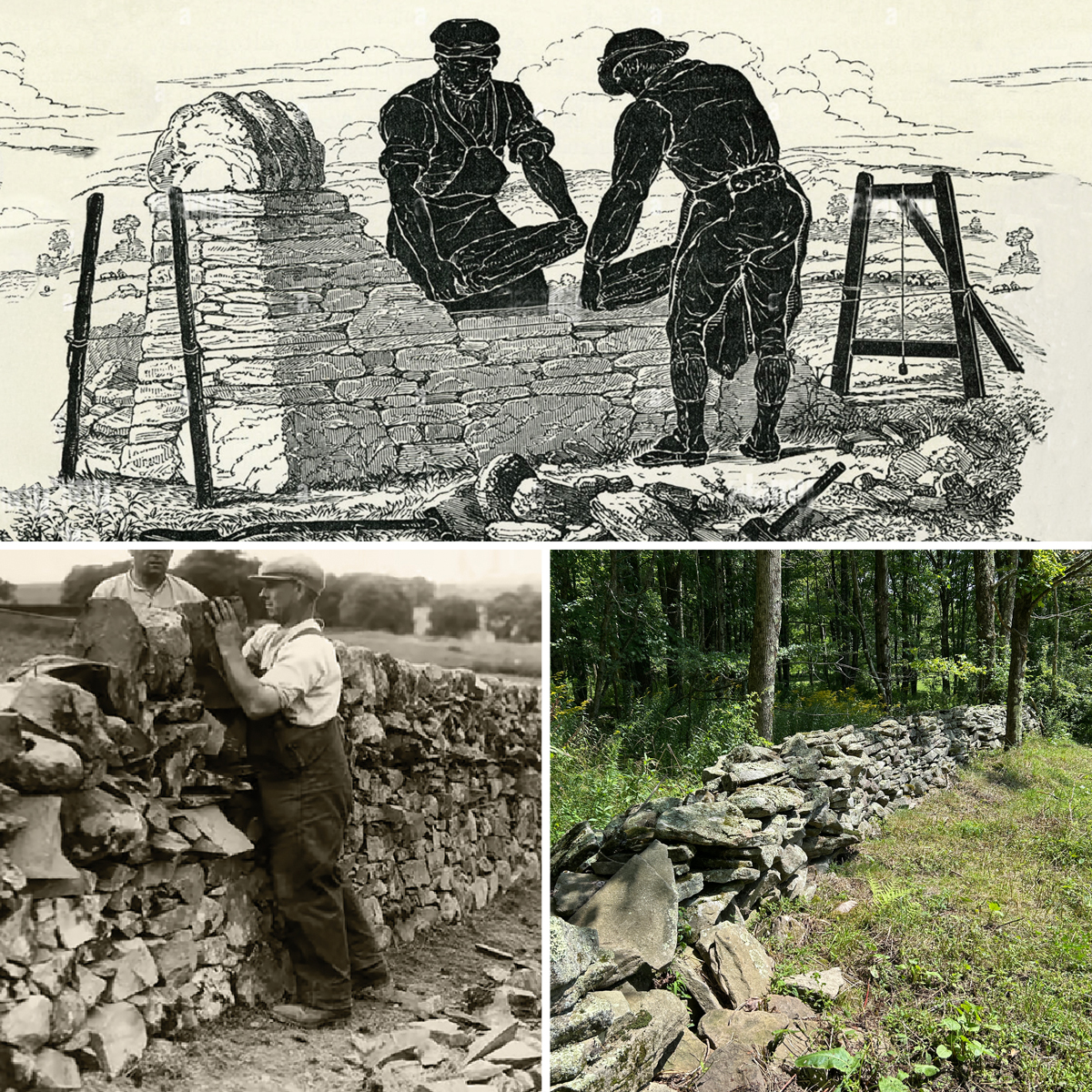
Pictured above, a Victorian illustration of English dry stone "wallers" building a wall guided by a "batter" to ensure the proper amount of taper towards the top of the wall; Scottish wall builders known as "dykers" building a dry-stone wall in the 1930s (left); a simple field edge dry stone wall in the Catskills (right).
This work was done by farmers, their families, hired workers, and enslaved people from the late 1600s through the mid 1800s. Then production practically stopped. The Merino wool craze of the mid-1800s which had fueled the final period of wall building to contain the sheep herds, ebbed away. Much lower cost barbed wire came to market in the late 1800s for anyone who needed fencing for cattle, and small farms throughout the region began to be unprofitable - serious farming was moving west and becoming mechanized. The age of walling was over.
Stone construction has, however, left its mark on the rural northeast. Stone was used not just for walling but also for spring houses, terrace retaining walls, barn and house foundations and sometimes for the house walls themselves. Today stone is still plentiful on many properties and can reduce the need for energy intensive concrete for small construction projects. Long lasting, elegant, and locally available, stone is a link to regional history and helps move building and land management toward a beautiful and functional future.

